

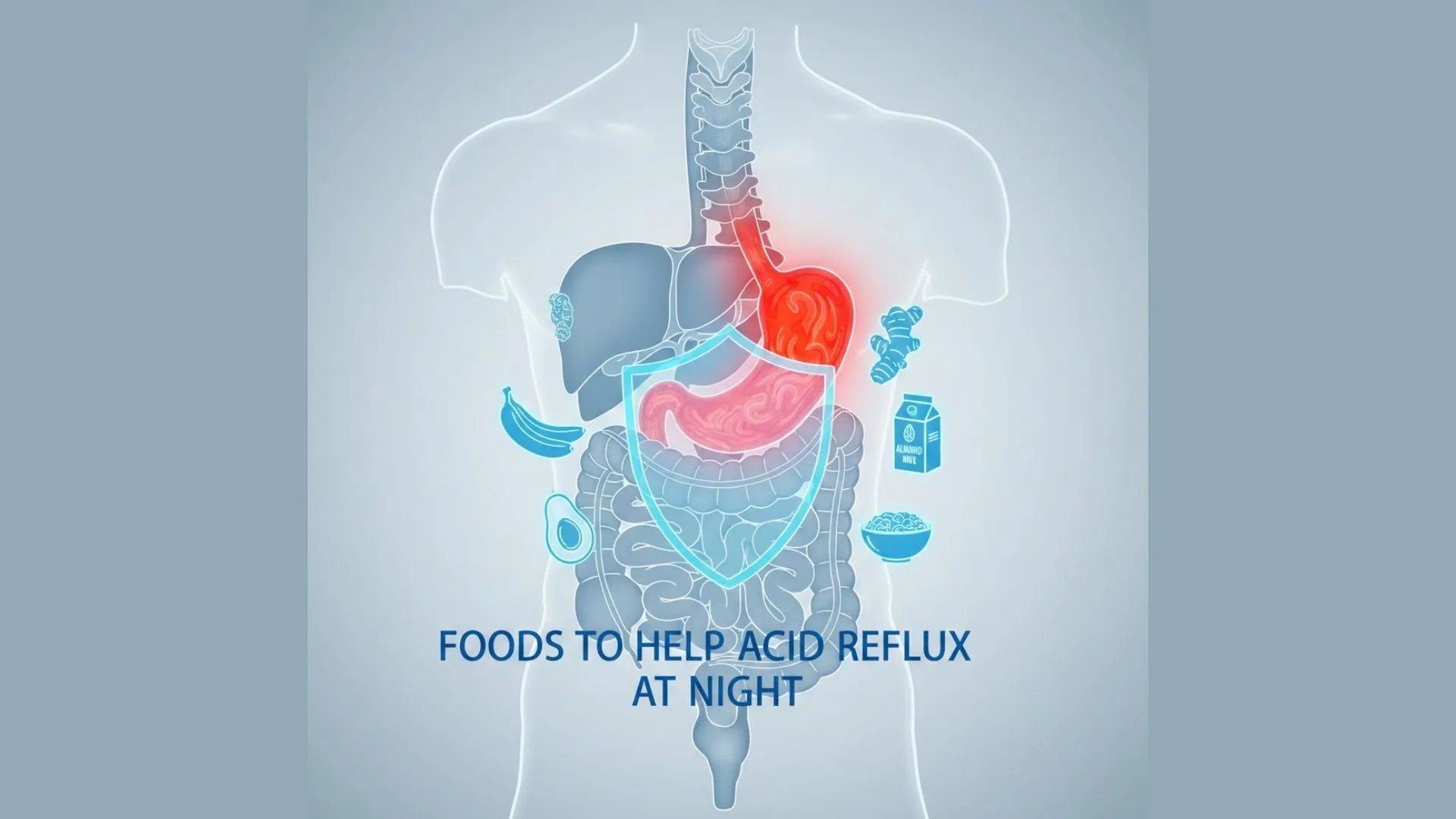
My eyes would snap open at 2 AM. Not to a sound, but to a sensation. A burning fire was crawling up my chest into my throat. I’d prop myself up, feeling that sour, acidic taste. I was 45, exhausted, and told this was just “part of getting older.” Another thing to accept. Another failure of my body. My nights were a battlefield, and I was losing.
I know exactly how that feels. That dread of bedtime, knowing pain might wake you. The frustration of a simple meal haunting you for hours. I am not a doctor. I was just a man in pain. But I refused to accept this as my normal. I spent 20 years researching, testing, and learning what truly works for my body. Here is what I found.
The key to fixing my nighttime acid reflux wasn’t a pill. It was a plate. I discovered that what I ate, and when I ate it, was the single biggest lever I could pull. By mastering a few simple food rules at night, I built a protocol that let me sleep in peace.
My Nighttime Eating Protocol: Building a Reflux-Free Evening
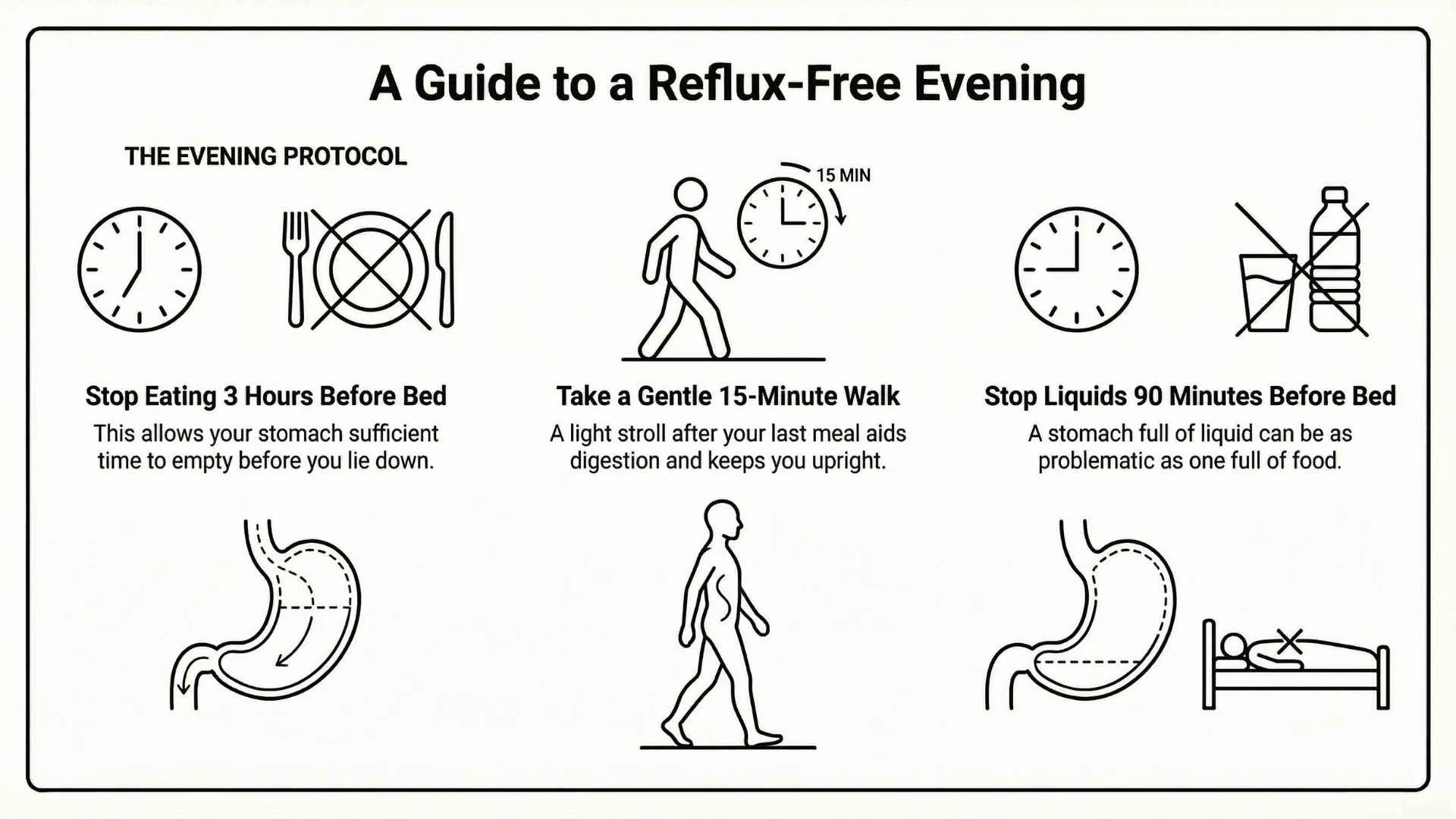
My first mistake was my biggest: I ate too late. I’d have a large dinner, often with friends, close to bedtime. My body was trying to digest a meal while lying flat—a recipe for disaster. My protocol became non-negotiable.
- The 3-Hour Rule: I stop eating all food at least 3 hours before I go to bed. This gives my stomach time to empty significantly.
- The Post-Dinner Stroll: After my last meal, I take a gentle 15-minute walk. No exertion. Just movement to aid digestion and keep me upright.
- The Last Sip: I cut off all liquids (except tiny sips of water) 90 minutes before bed. A full stomach from liquid is just as problematic as one full of food.
This simple structure was my foundation. Without it, nothing else worked.
What to Eat at Night to Reduce Acid Reflux? My Go-To Plate.

Through painful trial and error, I built my evening plate. The goal: gentle, easy-to-digest foods that wouldn’t stir up acid production. This is what worked for me.
- The Anchor: Lean Protein. Baked chicken breast, wild-caught fish, or turkey. Not fried, not heavily sauced. Simple and clean.
- The Buffer: Cooked Vegetables. I swapped raw salads at night for cooked greens like spinach, zucchini, or green beans. They are softer and easier to break down.
- The Gentle Carb: A small serving of sweet potato or white rice. For my body, these were less irritating than heavy wheat or bread at night.
- The Golden Rule of Portion: My nighttime meal is my smallest meal of the day. I eat like a king for breakfast, a prince for lunch, and a pauper for dinner. A overfull stomach is enemy number one.
The Ten Worst Foods for Acid Reflux (That I Had to Let Go Of)

This was the hard part. Letting go of foods I loved. But when I tracked my pain, the link was undeniable. These were my personal worst triggers:
- Coffee (after noon): My afternoon cup was a guaranteed night of burning.
- Red Wine: A single glass with dinner was a ticket to heartburn city.
- Raw Onions & Garlic: I loved them, but they loved to cause me pain.
- Citrus Fruits: That morning orange juice? A major trigger.
- Tomato Sauce: Pasta night became a thing of the past unless I made a special sauce.
- Fried Foods: They sat in my stomach like a lead weight.
- Spicy Foods: While some tolerate them, for me, chili peppers were a direct irritant.
- Chocolate: A bitter pill to swallow, but it relaxed my lower esophageal valve.
- Mint: Peppermint tea, sadly, made my symptoms worse, not better.
- Processed Carbs & Sugars: Donuts, pastries, and sugary snacks caused a massive acid surge.
Eliminating these wasn’t deprivation. It was a trade. I traded temporary taste for lasting peace and deep sleep.
What Foods Neutralize Stomach Acid Immediately? My In-The-Moment Tools.

Sometimes, despite my best efforts, I’d feel that familiar creep of acid after a meal. I don’t reach for medicine. I reach for these foods from my research and experience:
- A Slice of Fresh Ginger: I would steep it in hot water for a tea or simply chew a small piece. Research suggests ginger has potent digestive and anti-inflammatory properties. It was my immediate soother.
- A Spoonful of Pure, Raw Honey: Specifically, Manuka honey. I would take a teaspoon and let it slowly coat my throat. The viscous texture felt instantly calming.
- A Few Almonds: Eating 3-4 plain, raw almonds and chewing them thoroughly often provided quick relief for me. They seemed to absorb some of the acid.
- A Bite of Oatmeal: If I had some plain, cooked oatmeal leftover, a few spoonfuls acted as a gentle, absorbing buffer.
Also Read : How I Fixed My Gut Health with proper meal.
Remember: This is what worked for me. These are not cures, but tools in my personal toolkit for immediate symptom management.
A Simple 7-Day Meal Plan for Acid Reflux (From My Kitchen)

You don’t need complexity. You need a template. Here is a sample of what a week of my reflux-friendly evenings looked like when I was rebuilding my system:
- Monday: Baked salmon with dill, steamed asparagus, 1/2 cup white rice.
- Tuesday: Turkey lettuce wraps (using butter lettuce), mashed avocado, shredded carrot.
- Wednesday: Lentil soup (non-tomato based) with kale, 1 small slice of sourdough.
- Thursday: Sheet-pan meal: chicken breast, sweet potato cubes, and broccoli roasted with olive oil.
- Friday: Large salad at lunch. For dinner: scrambled eggs with spinach.
- Saturday: Grass-fed beef burger (no bun) on a bed of lettuce with avocado and cucumber.
- Sunday: Simple chicken and vegetable soup.
Notice the themes: lean protein, cooked veggies, early timing, small portions.
Which Fruit Removes Acidity? The One I Eat Every Day.
After years of avoiding fruit at night, I discovered one that became a daily ally: the banana. Specifically, a ripe, spotty banana. It is low in acid, high in pectin (a soluble fiber that helps move food through the gut), and acts as a natural antacid in my stomach. I eat one most mornings. For an evening option, I found melon (cantaloupe, honeydew) to be incredibly gentle and soothing.
Frequently Asked Questions
In my experience, no. For many people with true reflux, vinegar is an acid and can worsen symptoms. This was certainly true for me. The “vinegar fix” is a popular theory, but it made my burning far more intense.
Temporarily, maybe. But for me, it was a trick. The milk provided a brief coating sensation, but the fat and protein actually stimulated more acid production later, leading to a “rebound” effect that was often worse.
My protocol is simple but critical. I use a wedge pillow that elevates my entire torso from the waist up, not just my head. Gravity is your friend. I also always sleep on my left side. Research suggests this position can keep the junction between stomach and esophagus above acid level.
Absolutely. In my 40s, my burnout was a major trigger. When I was stressed, my digestion shut down and my symptoms flared. Learning to manage stress through walking and breathwork became as important as my diet.
This was a game-changer in my protocol. I found that a high-quality probiotic helped balance my entire gut environment. When my gut health improved, my reflux symptoms diminished significantly. This is what worked for me.
Conclusion:
For 20 years, I was told my pain was just aging. I rejected that. I became the architect of my own body, brick by brick, meal by meal. Nighttime acid reflux wasn’t my life sentence; it was a problem to solve. It started by listening to my body, tracking what hurt, and having the courage to change what was on my fork.
The power isn’t in a magic pill. Trading that late-night snack for a peaceful sleep is where it begins. It’s found in the decision to have an early, light dinner. Ultimately, it’s in your daily choices. You have the blueprint now, based on my two decades of experience.
You are the architect of your own body. Start building today.
Disclaimer: The content on this website is based on personal experience and research. It is for informational purposes only and is not medical advice. I am not a doctor. Always consult your physician before changing your diet, exercise, or supplement routine.