

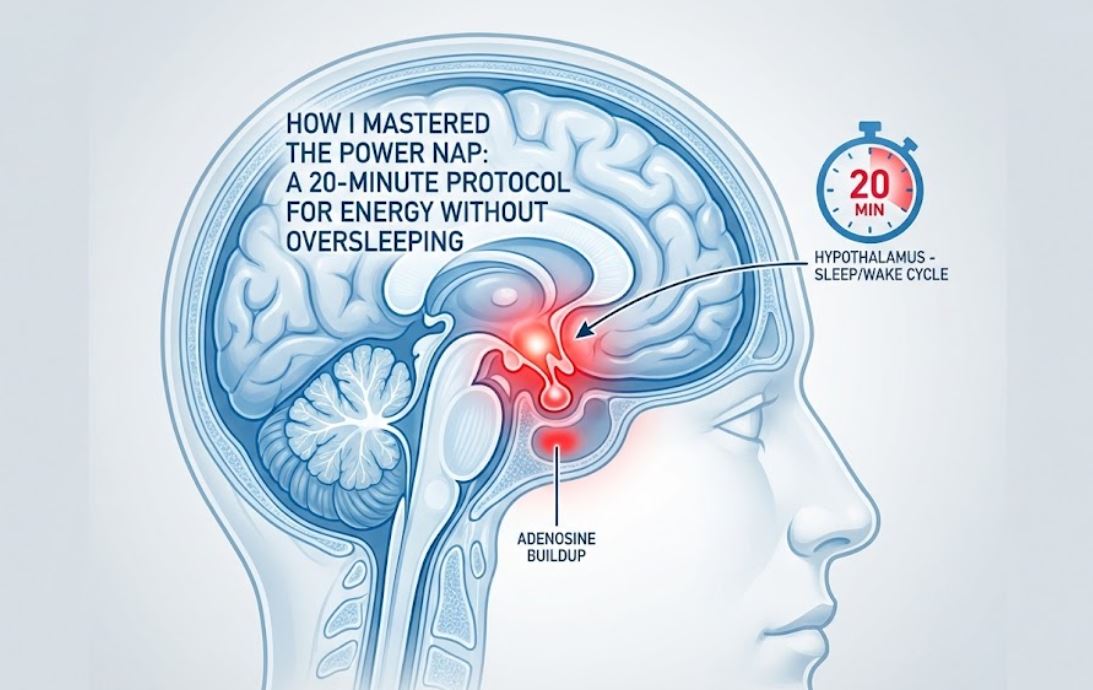
I recall the pain behind my temples, pulsating and unbearable. It was 2:30 in the afternoon twenty years ago. I was 45, slumped at my desk. The report on my desk was a mere sequence of words. I had two options — fight through the exhaustion and get nothing done, or lie my head down and wake up one hour later, groggy and disoriented, feeling worse than before. This was my daily normal. I thought this midday crash was just my fate, a sign of age I had to accept. For years, this crash was made worse because I was waking up tired every morning, never fully repaired from the night before.
If this sounds familiar — that desperate desire for resting combined with the realization that you’re going to wake up even more tired than when you went to bed — I get it. I’ve been there. I was told it happened when you got older, and I refused to accept that. I am not a physician, but I am my body’s sleuth. Years of dabbling and failing later, I found a way to rest smartly. I’ve learned that a short nap in the afternoons is not punishment for living. It was a puzzle I could solve.
For me, the secret was not shunning sleep but learning how wield its power to my advantage. I found a way to take the ultimate power nap that allowed me to not oversleep. It turned my tired afternoons into a second sunrise. My method has three key components: the most convenient way to take a nap so you maximise your restfulness, how to set up an environment for comfortable sleep without being disturbed, and a simple trick for waking up feeling refreshed. Together, these steps transformed my approach to rest.
The Core Rule: Understanding Power Nap Benefits And Duration

My early “naps” were a disaster. I’d sleep for an hour and wake up in a deep fog. I felt terrible. Through my research and self-experimentation, I learned why.
Sleep happens in cycles. You’re in light sleep, the first stage. This stage is refreshing. It is an aid in mental de-cluttering and infusing alertness. Get to that 20 to 30 minute mark, and you slip into deep sleep.
It’s waking up from deep sleep that makes it so hard to get out of bed: That groggy, disoriented feeling is called “sleep inertia,” and a number of studies have found a correlation between the severity of it and how far they’ve fallen into REM sleep. According to research compiled by the Sleep Foundation, being woken from deep sleep creates more sleep inertia, while avoiding the deeper stages leaves you feeling refreshed when waking up.
My non-negotiable protocol became this:
- The 20-Minute Sweet Spot: I set a firm, unbreakable timer for 20 minutes. This ensures I stay in that restorative, light sleep stage.
- The Primary Benefit: This short duration gave me the key power nap benefits: mental reset, improved mood, sharper focus, and better motor skills, without the oversleeping hangover.
- My Mental Shift: I stopped thinking of it as “sleep.” I started calling it a “system reboot.” This mindset change was crucial.
How To Take A Power Nap Fast And Consistently

The biggest hurdle wasn’t falling asleep. It was creating the conditions to fall asleep quickly. I couldn’t waste 15 of my 20 minutes just trying to nod off. Here is the exact routine I built:
- Schedule It: I nap at the same time every day, right after lunch (around 1 PM). My body now expects it and prepares.
- The Environment Is Everything: I don’t just lie on the couch. I go to a dark, cool room. I use blackout shades and a white noise machine. This signals my brain: it’s time to shut down now.
- The Gear: I use a comfortable eye mask and keep a light blanket nearby. A slight drop in body temperature aids sleep.
- The 5-Minute Wind-Down: I spend five minutes before my nap doing slow, deep breathing. I focus on relaxing each body part from my toes up. This wasn’t optional; it was the launch sequence for my reboot.
How To Take A Nap When You’re Not (Or Think You’re Not) Tired

Sometimes, my mind would race. I’d think, “I’m not tired enough to sleep.” This was a trap. The goal of a power nap isn’t always deep unconsciousness. It’s deep rest. Here’s what I learned to do:
- Follow the Protocol Anyway: I would still go to my dark room, set my 20-minute timer, and put on my eye mask.
- Focus on Rest, Not Sleep: I’d repeat my breathing routine. My mantra was, “If I sleep, great. If I just rest deeply here for 20 minutes, that’s also a win.”
Also Read : How I Fixed Severe Vitamin B12 Deficiency Symptoms.
- The Result: Nine times out of ten, the sheer act of deliberate, sensory-deprived rest would tip me into light sleep. Even on the rare occasion it didn’t, I stood up after 20 minutes feeling more centered and calm than when I lay down.
My Personal Protocol For Power Naps While Studying Or Working
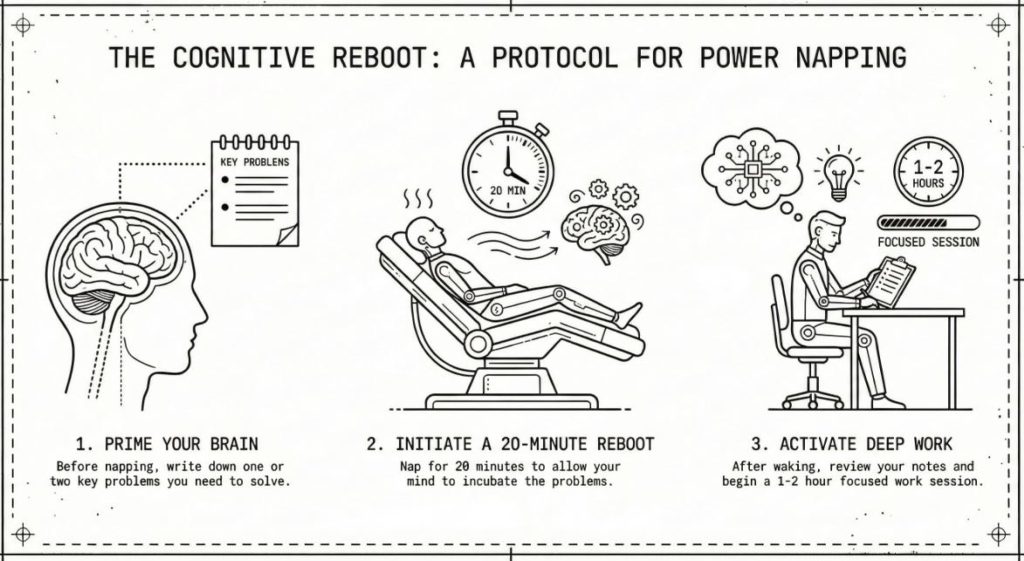
Mental work is exhausting. When I was deep into my research phases, I used power naps as a secret weapon. This wasn’t about laziness; it was about cognitive maintenance.
- The Pre-Nap Ritual: Before lying down, I would jot down one or two key problems I was trying to solve. I’d literally write, “Figure out the connection between X and Y.”
- The Post-Nap Magic: After my 20-minute reboot, I would review those notes with a fresh cup of green tea. The clarity I often experienced was startling. Solutions seemed more obvious. This process of “incubating” a problem during a nap is well-documented in research.
- Scheduling for Flow: I would schedule intense mental work sessions for immediately after my nap. My brain was primed, clear, and ready for deep work for the next 1-2 hours.
How Many Power Naps Per Day? And Other Timing Questions
More is not better. This was a hard lesson. One strategic nap was a tool. Two or three were a sign my overall system was broken. When my system was weak, I also noticed how slowly I could regain energy after physical exertion.
- My Rule: One and Done. I limit myself to one deliberate power nap per day. If I felt an intense need for a second, it was a red flag. It told me my nighttime sleep quality was poor or my daily energy management was off. In my case, one of the hidden causes behind that constant depletion was severe vitamin B12 deficiency.
- The 30-90 Rule For Naps: In my research, I encountered this. It suggests if you accidentally go past the 30-minute power nap, you should aim for a full 90-minute nap to complete a full sleep cycle and wake from light sleep. My experience? I avoid this scenario completely by sticking to my 20-minute timer. Planning a 90-minute nap in the day was not practical for my life.
- The 8-Minute Navy SEAL Nap: People ask if it’s real. The technique—a specific way of relaxing the body—is real and can be deeply restorative. For me, an 8-10 minute period of this guided rest was excellent for acute stress relief. But for a consistent, daily cognitive reset, my 20-minute protocol was more reliable.
Frequently Asked Questions
My absolute rule is a loud, obnoxious timer set for 20 minutes, placed across the room so I have to get up. Consistency trains your body’s internal clock. This is the single most important step in my protocol.
Here’s the evening wind-down protocol that genuinely improved my nighttime sleep and made my daytime naps more restorative:
1. Avoid caffeine for at least 10 hours before bedtime.
2. No food or alcohol within 3 hours of going to bed.
3. Stop working 2 hours before sleep.
4. Turn off all screens 1 hour before bed.
5. Don’t hit the snooze button in the morning.
Stick to these steps for deeper sleep and better daytime energy.
The technique is a real method for rapid relaxation used in high-stress fields. It involves consciously relaxing muscle groups and controlling breathing. I’ve used it when traveling or in loud environments. It provides deep rest, but for a daily reboot, I still prefer my 20-minute nap in an ideal environment.
This is a recovery rule if you oversleep. It says if you nap past 30 minutes into deep sleep, don’t wake up until 90 minutes (a full cycle) to avoid severe grogginess. My entire system is designed to never need this rule by strictly adhering to the 20-minute limit.
Absolutely not. In my experience, a power nap is a brilliant supplement to good nighttime sleep, not a replacement for it. Trying to use naps to fix bad nights is a losing strategy that leads to worse overall sleep.
Conclusion
For twenty years, I’ve treated my body like a complex, beautiful system that I have the privilege to manage. Learning how to take a power nap without oversleeping was a major upgrade to that system. It took me from afternoon crashes to afternoon resets. It gave me back hours of productive, clear-headed time every single day.
It’s simple, but not always easy: 20 minutes, a dark room, a resolute alarm clock, and the conviction that you deserve to feel bright-eyed and bushy-tailed all day. This is not aging and slowing down. It’s finding wisdom and strategy in your energy.
You build your own body. Start building today.
Disclaimer: The content on this website is based on personal experience and research. It is for informational purposes only and is not medical advice. I am not a doctor. Always consult your physician before changing your diet, exercise, or supplement routine.