

A night that I can remember as clear as day. I was 45 years old one night at 2AM my mind was racing. The TV was already off for few hours and I felt sleepy. My body was hurt. Watching at the dark ceiling my eyes felt hot. I thought watching my phone would make me feel good but it just worsen the situation. I told my doctor, “I can’t stop my brain. I’m tired but I can’t sleep.” He raised his hand. “It’s part of the aging process,” he said. He told me it was normal. I refused to believe it. Blue Light Really Affect Sleep? it was my real confusion.
I know exactly how and why you are worrying reading this post. The fatigue that follows you all day. Fear that your best rest has passed. I havĕ done researching 20+ years looking for answers. Thought I am not a doctor. But I am someone who has rebuilt his life from scratch. Here’s what I found on my travels.
The key to fixing my sleep was figuring out the hidden culprit: Blue Light. I realized that my morning routine tricked my brain into thinking it was night. My simple light blocking protocol allowed me to get the deepest and most restorative sleep I had experienced in years.
My Journey : from Wired to Tired

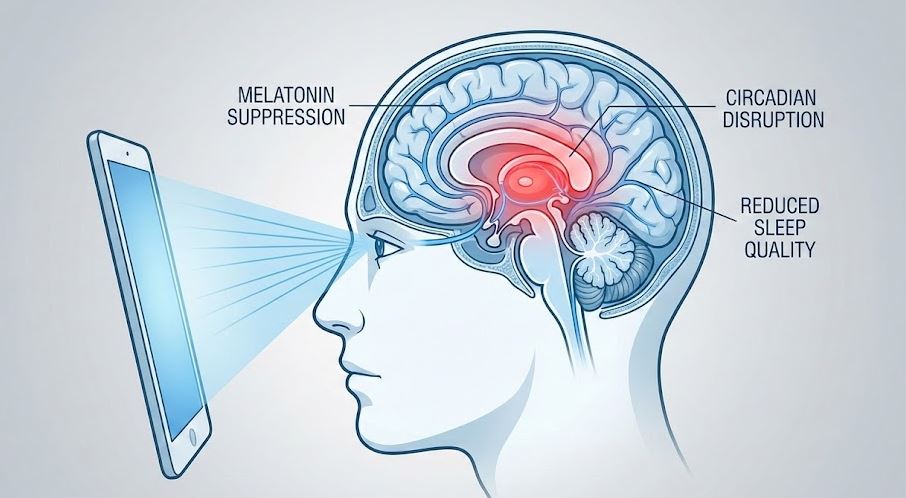
For years, I blamed stress, age, or diet for my poor sleep. My turnaround began not with a pill, but with a question: why does blue light suppress melatonin? In my research, I learned our brains have a direct line to the sun. Special cells in our eyes detect blue light wavelengths—the kind that fills the morning sky. This signals our master clock, the circadian rhythm, to halt melatonin production. Melatonin isn’t a sleeping pill; it’s the hormone that tells your body, “It’s night. Time to wind down.”
My problem was simple. My living room at 9:30 PM was a sunrise simulator. The TV, the tablet, the phone, the energy-efficient LED bulbs—all flooding my eyes with blue light. My brain was confused. It thought, “The sun is up! Be alert!” So, it shut down melatonin production. I was sabotaging my sleep without touching a cup of coffee. The blue light effect on sleep research is clear: exposure in the evening delays and reduces melatonin, pushing your entire sleep cycle later.
My Nightly Blue Light Protocol
I didn’t throw out my gadgets. I got strategic and created an evening environment that whispered “nighttime” to my brain. This is what worked for me.
- I Enforced a Digital Sunset. My first rule: no screens 90 minutes before bed. This was the single hardest but most effective change. I replaced scrolling with reading a physical book or listening to calm music.
- I Became a Light Detective. I looked at every light source after dark. I swapped out bright white blue LED lights in my bedroom and bathroom for warm, amber-colored bulbs. These emit far less sleep-disrupting blue light.
- I Used Software Defenses. On the devices I had to use, I enabled “Night Shift” or “Blue Light Filter” modes. These make the screen look orangey-red. It’s not perfect, but it helps a lot.
- I Tried Blue-Blocking Glasses. For nights when I wanted to watch a movie, I got a pair of amber-tinted glasses. They filter out the blue spectrum. The first time I wore them, I felt a wave of calm about 20 minutes in. My body was finally getting the “darkness” signal.
This wasn’t about perfection. It was about protection. Giving my brain the darkness it needed to do its job.
The Blue Light Sleep Myth

You might have heard the blue light sleep myth—the idea that it’s all overblown or that brightness matters more than color. From my experience, color is crucial. Yes, a blindingly bright red light will keep you awake. But a dim blue light is more disruptive to your circadian rhythm than a brighter warm light. The research focuses on the specific wavelength.
And yes, TV is considered blue light. So are tablets, smartphones, and most modern light bulbs. The question isn’t if they emit blue light; it’s how much and for how long you’re exposed. A 30-minute TV show is different from a 3-hour binge before bed. My rule became: the closer to bedtime, the less blue light.
Building a Sleep Supportive Environment
Fixing blue light was my foundation. But I built on it with other habits that reinforce my circadian rhythm.
- Morning Sunlight is Non-Negotiable. I get outside within 30 minutes of waking. I look toward the sun (not directly at it!) for 5-10 minutes. This morning blue light is essential. It resets my clock, boosting daytime energy and strengthening the melatonin signal for night.
- My Bedroom is a Cave. It is pitch black, cool, and quiet. I use blackout curtains. Even the little green light from a charger is covered. Total darkness tells my brain the “off” switch is fully engaged.
- The Wind-Down Ritual. I follow my own version of a pre-sleep routine. An hour before bed, the house lights dim. I might do some gentle stretching. I avoid heavy conversations or work emails. This signals a transition.
People ask, “How do Navy Seals fall asleep so quickly?” They use drilled techniques to calm the nervous system. My version is my environment. I engineered my surroundings to make sleep the default, natural next step. I don’t need to force it.
The Long Term View

In my deep dive, I also found scary terms like blue light brain damage. Some animal studies suggest extreme, constant exposure might harm cells. For me, the more immediate concern was the cascade of poor health from chronic bad sleep: inflammation, brain fog, weight gain, and mood swings. I had lived that.
Also Read : Why do I wake up Tired every morning?
By mastering my light environment, I didn’t just fix my sleep. I improved my entire day. My energy was stable. My morning stiffness faded. It made my mind clearer. How does blue light affect circadian rhythm? It doesn’t just affect sleep. It sets the tempo for your hormones, digestion, and cellular repair. Get the rhythm right, and everything plays in tune.
Frequently Asked Questions
No, not in the evening. Blue light tells your brain to wake up. For sleep, you want darkness or very warm, dim light. This is what worked for me to signal to my body that it was time to rest.
Red light is far better if you need a nightlight. It has the least power to suppress melatonin and disrupt your circadian rhythm. I use a dim red bulb in my hallway if I need to get up at night.
From my experience and the research I’ve seen, it can be significant. It can delay sleep onset, reduce deep sleep quality, and make you feel less rested in the morning. Cutting evening exposure was a game-changer for me.
It’s a simple rule that says No caffeine 10 hours before going to bed. No food/alcohol 5 hours before , No work 3 hours before. No screens 2 hours before. And 1 hour for your mind to relax. I adapted this to my own 90-minute screen rule.
Simply yes, modern TVs, especially LEDs ones, emit a significant amount of blue light. Now a days I watch it earlier before evening. Even if I watch it at night then I prefer watching with my Blue-Blocking Glasses on.
Conclusion
For years, I was fighting my own biology every night. I was flooding my brain with light that screamed “DAY!” and then wondering why it wouldn’t shut down. The answer to “does blue light really affect sleep?” was a definitive yes in my life. By taking simple, strict steps to manage my artificial light exposure – More blue in morning time and Less in the evening – I have rebuilt my sleep from the foundation up.
You don’t have to accept restless nights as your new normal. Start with one change. Try a digital sunset for a week. Swap a bedroom light bulb. See how you feel. Your body wants to sleep. You just have to give it the right signals.
You are your body’s main architect. Start working to build it today.
Disclaimer: The content on this website is based on personal experience and research. It is for informational purposes only and is not medical advice. I am not a doctor. Always consult your physician before changing your diet, exercise, or supplement routine.