

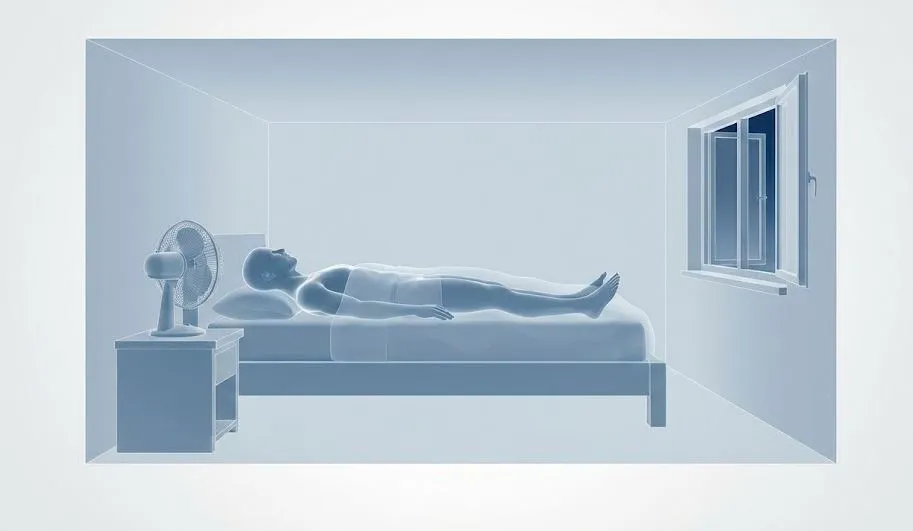
One night I can clearly remember waking up again and again at 2:43 AM. There was a digital clock in my room – Only that light which was making me feel suffocating.My sheets were twisted and moist, the air was hot and heavy in a way that felt like an unending struggle to breathe through a thick, warm damp. At 45, I was tired and felt every one of those years. My bedroom, my refuge, had turned into the enemy. I’d just lie there, panic-stricken and hot-but-not-sweating (not sure the sweat glands were active), heart pounding less from fear and more from sheer thermal anguish, while dreading in advance the groggy, irritable ghost I’d be transformed into the next day. “Just another hot night,” I’d mutter, mistaking misery for resilience. Cool Down a Room at Night without AC is my main problem that has to be fixed.
If you’re there on the other side, trapped in that cycle of sweat and defeat, then you know this is more than discomfort; it’s a thief who steals rest from your night, energy from your day… tomorrow from your life. I understand that visceral frustration. You don’t need just a cooler room; you need a consistent, predictable system for deep and comfortable sleep. I’m not a medical doctor or a climatologist. But I am a dogged problem-solver. For two decades, I turned my own home into a laboratory, experimenting, failing, and ultimately discovering a reproducible protocol. This isn’t a list of tips; it’s a holistic, physics-based strategy for becoming the architect of your own microclimate.
The profound secret I learned is this: Cooling a room at night is not a reaction you take at bedtime. It is a proactive campaign you begin at dawn. It’s about thermal management—blocking, flushing, and storing. The following protocol is the synthesis of my 20-year journey of to Cool Down a Room at Night without AC. It works whether you have a single sweltering bedroom or an entire apartment.
The Daytime Protocol – Building Your Fortress
Let me start with the most important mistake that everyone does is opening windows during the day. You have to understand when outdoor temperature exceeds the indoor temperature, you are not letting in breeze but inviting the outdoor heat to take up permanent residance in your bedroom, furniture and air. You should always maintain the coolness from the pervious night. To Cool Down a Room at Night without AC please understand these –
1. The Morning Seal: A Non-Negotiable Ritual
As soon as the sun crests the horizon, your routine begins.
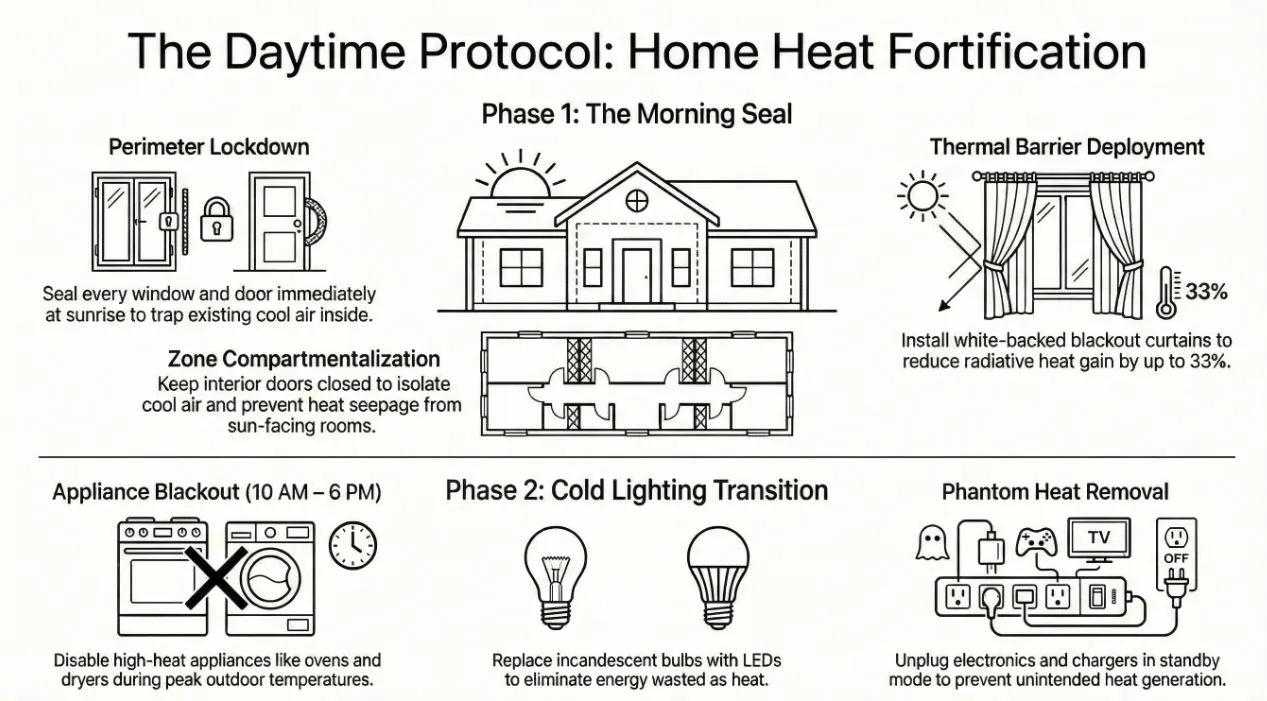
- Close Every Window and Door: Make this as habitual as brushing your teeth. Seal the perimeter.
- Deploy Your Thermal Barriers: Close all blinds, shades, and curtains. Here, investment matters. I found that blackout curtains with a white, reflective backing are transformative. They are not merely light blockers; they are radiative heat shields. University of Oregon researchers found medium-colored draperies with white plastic backings can reduce heat gain by 33 percent. Hang them as close to the window as possible and with the shade completely covering the wall; from floor to ceiling, so no heat can leak out.
- Insulate from Within: Keep interior doors leading to other parts of the house that could potentially be warmer (think sun-facing living rooms) closed. This compartmentalizes your cool zone.
2. The Daytime Mindset: Eliminate Internal Heat Sources
Your fortress must be defended from within. Throughout the day:
- Banish Heat-Producing Appliances: Avoid using the oven, stove, or clothes dryer during the hottest part of the day (10 AM – 6 PM). Opt for no-cook meals, slow cookers, or outdoor grilling.
- Switch to Cold Lighting: If you have incandescent or halogen bulbs, replace them with LEDs. A single 60-watt incandescent bulb emits about 90% of its energy as heat—it’s a tiny space heater. LEDs run cool.
- Unplug Electronics: Chargers, gaming consoles, and amplifiers in standby mode generate “phantom heat.” Unplug them or use a smart power strip.
The Evening Transition – Engineering the Night Flush
This is the pivotal moment. As the sun goes down, outside temperature starts falling. Your objective is to grab hold of that cooler, denser air and let it flush yesterday’s heat out of your house’s thermal mass (the walls and floors).
1. Identify the Crossover Point:
Use a simple indoor/outdoor thermometer. When it is 2-3 degrees colder outside than your inside temperature, the flush goes into effect.
2. Create a Cross-Breeze Wind Tunnel:
Open windows strategically. This is not random.
- The Principle: Open windows on two opposing sides of your house or room, and at different heights if you can. Cold air enters low on the windward side, and warm air escapes high on the leeward side. It takes advantage of the stack effect (hot air rises) and cross-ventilation.
- The Fan as an Exhaust Tool: Place a powerful box fan or window fan in a window facing outward on the hotter, leeward side of your home (often the side that got the most sun). This actively exhausts hot indoor air, pulling cooler night air in through other open windows much faster. This one tactic alone can drop a room’s temperature by 5-10 degrees in under an hour.

3. The Natural Amplifier: The Damp Sheet Trick
Cooling Down a Room at Night Without AC For an emergency way to induce a burst of evaporate cooling, try hanging a damp (but dishwasher dry — not dripping!) cotton sheet or towel in front of the window that’s your room’s 1) point of air entry and 2) place where you hope it departs. The wind blows through the fabric, and as water evaporates it draws in heat from the air, their studies show. It’s a ancient, elegant technology.
The Bedtime Protocol – Personal and Proximal Cooling
By now, your room should be significantly cooler. Now, we optimize your body and immediate surroundings for sleep onset. The body must drop its core temperature to initiate and maintain sleep.
1. The Sleep Surface:
- Bedding: Replace polyester or heavy blends with 100 percent breathable cotton or linen sheets. I packed my duvet away for the summer and pulled out a light, woven cotton blanket. If you want to spend more, try a chill pad or a mattress cooler.
- Pajamas: Opt for roomy 100% cotton or moisture-wicking sleep clothes. Or sleep naked to ensure as much skin-to-air contact for sweat to evaporate.
Also Read : Natural Sleep Aids that work.

2. The Pre-Sleep Body Cooldown (Non-Negotiable):
- The Cool Shower: 60-90 minutes before bed, have a 3 to 5 minute cool-to-lukewarm shower. This isn’t a slap in the face of cold, but rather a gradual cooldown that brings down your body’s core temperature and signals where you are in your circadian rhythm: Time for sleep.
- Pulse Point Therapy: The next time you’re in bed, park a basin of ice water and a rag by your bedside. Apply the cold cloth to your wrists, neck, ankles and behind your knees right before lying down (it will still feel cool for hours).These areas have arteries close to the skin; cooling them cools your blood circulation.
- The Frozen Sock Technique: My strangest, most effective discovery.§ My strangest, quite effective life hack. Soak a few thin cotton socks in cool water, wring them out and freeze them for 15-20 minutes. Slip them on as you crawl into bed. Vasodilation occurs when you cool the feet, which is actually a mechanism to help release heat from the body. The result is a surprising speed and security blanket.
3. Strategic Fan Placement In the Room:
- For Air Movement: Use a small oscillating fan on a nightstand or dresser. Set it to low speed and slow oscillation. The goal is not a hurricane, but a gentle, continuous disruption of the insulating layer of warm air that forms around your body. This dramatically improves sweat evaporation.
- The Ice-Bowl Amplifier (For Emergency Local Cooling): If you’re still struggling, this classic works. Fill a metal mixing bowl or roasting pan with ice. Add a handful of salt (rock salt works best), which depresses the ice’s melting point, making the slurry colder. Place it at a slight angle in front of a medium-sized fan, so the air blows directly over the ice’s surface. This creates a genuine, localized cool breeze—a personal air conditioner for your bedside.
The All-Night and Early Morning Strategy
Your work doesn’t end when you fall asleep. The goal is to maintain the cool haven until morning.
- Run the Night Flush All Night: If security and weather permit, leave your cross-ventilation system running. The continuous exchange keeps the room fresh. If noise or security is an issue, run it for the first few critical hours of sleep.
- The Pre-Dawn Capture: The coldest air is typically just before dawn. Set an alarm for 4:00 or 5:00 AM. This is your final, critical action: close all windows and reseal your fortress (curtains, doors). You are now trapping the night’s accumulated coolness inside, giving yourself a massive head start against the coming day’s heat.
- Hydration is a Night-Long Process: Keep a large insulated bottle of ice water by your bed. Sipping cool water throughout the night helps your body’s natural thermoregulation through perspiration.
Frequently Asked Questions
The entire protocol is budget-friendly. The most significant costs are blackout curtains ($20-$50) and a good box fan ($20-$40). Everything else uses items you already own—bowls, ice, sheets, socks. The real investment is diligence, not dollars.
Scientifically, yes, but with caveats. The cooled surface is then subjected to a flow of air produced by the fan, which further cools it by conduction. The slurry of salt and ice is a cooler thermal mass. The problem? Though it’s an obesity-localizing, humidity-braising remedy. It is most effective as a way to cool a small, personal space (like directly around your bed), for near-instant relief and not for cooling down an entire room.
Sleep research consistently points to 60-67°F (15-19°C) as the optimal range. To enter and maintain deep (NREM) and REM sleep, your body’s core temperature must drop by about 1-2 degrees Fahrenheit. A room at 72°F can hinder this thermoregulatory process, causing restless, fragmented sleep even if you feel you’ve “adapted” to the heat.
What You May Also Ask
Treat it as a sealed unit. During the day, keep its door closed with a towel at the base to block warm air from the house. At night, use the exhaust fan method in its window. Place the fan blowing outward. This creates negative pressure, actively sucking cool air from other parts of the house or from other small, opened windows in the same room. Combine with intense body-cooling methods.
Embrace pure passive cooling:
Use the night flush by manually opening low and high windows.
Wet your skin lightly with a damp cloth and let evaporation cool you.
Sleep on a cotton or bamboo mattress topper for breathability.
Use a traditional hand fan to create a personal breeze.
Sleep lower to the ground—heat rises, so the floor is often 5+ degrees cooler.
Fill a hot water bottle with ice water and place it at your feet or beside you in bed.
Conclusion 20-Year Summary: A Blueprint, Not a Wish
Cool Down a Room at Night without AC protocol is a system of interlocking habits: Seal, Flush, Cool, Maintain. It requires you to shift from being a passive victim of the weather to an active manager of your environment.
For twenty years, I refused to accept those swampy nights as my fate. This is the exact, battle-tested blueprint that emerged. You don’t need cutting-edge technology or excessive spending. You need a plan rooted in physics, physiology, and consistent execution.
Start tonight. Begin with one step—the morning seal, the evening flush, the cool shower. Observe the difference. You are the architect of your sleep and your sanctuary. Reclaim it.
Disclaimer: The content on this website is based on extensive personal experience and research into passive cooling principles. It is for informational and educational purposes only and is not intended as medical advice. I am not a doctor or healthcare professional. Always consult your physician or a qualified health provider with any questions regarding sleep disorders or before making significant changes to your lifestyle routine. Your health and safety are paramount.