

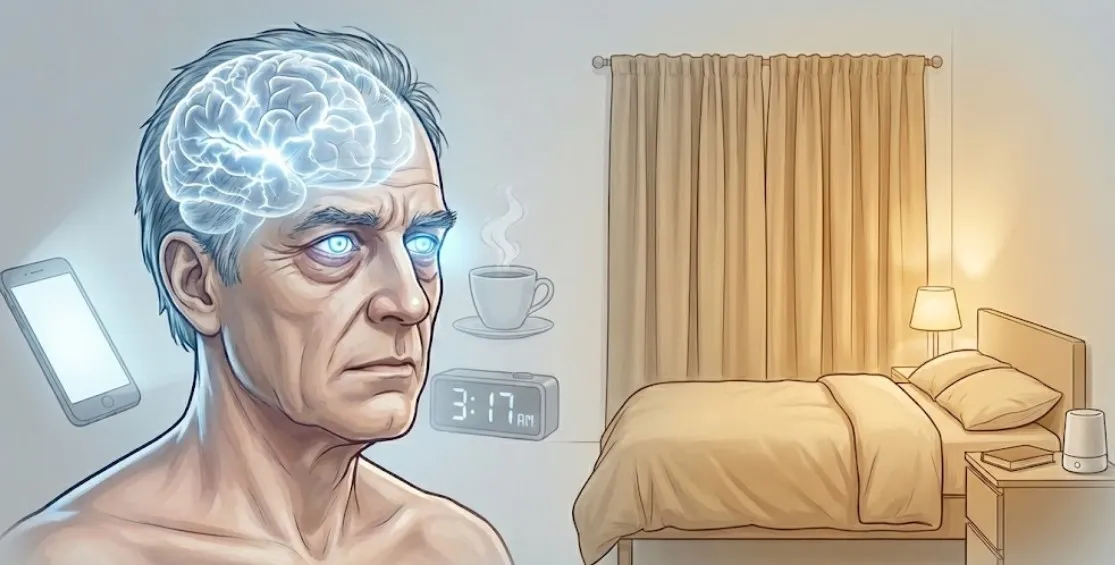
I remember the ceiling. Every night, 3:17 AM. The clock glowed red. My back ached and mind raced about meetings I already survived. My wife breathed slow next to me, and I was completely alone. At 45, I wasn’t just tired. I was wrecked. Sleep wasn’t rest. It was a four-hour negotiation I kept losing. I woke up angry, foggy, and already behind. The doctors said it was normal. “You’re not 25 anymore.” They smiled. I believed them. For ten years, I believed them. Till that I had no idea about Sleep Hygiene Techniques.
Then I got mad. Not at them—at myself. I spent two decades designing buildings. Structures that lasted centuries. But I let my own body crumble because some guy in a white coat said “normal aging.” I started digging and read studies. I talked to biochemists, not just general practitioners. Also I experimented on myself like a lab rat. What I found changed everything: The body follows orders. You just have to give the right ones.
This is not a medical textbook. I am not a doctor. This is a letter from a guy who climbed out of the hole and wants to hand you the rope. Below are 11 Sleep Hygiene Techniques I discovered. They rebuilt my sleep. They can rebuild yours. I am living proof: you can architect a 35-year-old body at 65. It starts when you starts taking real actions.
1. Create a relaxing bedtime routine — and stick with it
At 45, my “routine” was chaos. Some nights I worked until midnight. Others I collapsed on the couch with the TV blaring. I fell asleep to murder documentaries and woke up feeling like a victim. My brain didn’t know when shutdown happened. It was always on alert.
I discovered the problem: I treated sleep like a light switch. I expected instant off. The body is a dimmer. It needs a sunset.
My protocol was 60 minutes of “shutdown signals.”
- Dim the lights. Not mood lighting—actual low light. I learned bright light tricks your brain into thinking it’s noon.
- Paper only. I switched from phone scrolling to a real book. Fiction, not work. The feel of paper matters. The smell matters.
- Temperature drop. I crack the window. Even in winter. Research suggests a cool room (around 65°F) tells your body it’s time to nest.
- The same sequence, every night. Lock the door. Brush teeth. Read. Lights out. I repeated this until my brain stopped negotiating.

It felt stupid at first. Like training a dog. But within two weeks, my body started the cooldown before I even hit the pillow. Routine is not boring. Routine is freedom.
2. Keep a consistent sleep schedule
I used to “catch up” on weekends. Sleep until 10 AM Sunday, feel hungover Monday. It turns out you cannot bank sleep. You cannot owe it interest. Sleep is not a loan.
I found that erratic timing confused my internal clock. It was like living in a different time zone every few days. My body didn’t know when to release melatonin, so it just… didn’t.
My fix: I picked a bedtime (10:00 PM) and a wake time (5:30 AM). I kept it. Saturday. Sunday. Christmas. No exceptions. It took one brutal week of early alarms. Then something shifted. I started getting sleepy at 9:45 PM naturally. No struggle. No counting sheep. My body learned the schedule and took over. Consistency is the cheat code.
3. Stop using electronic devices before you go to sleep
I was so addicted that I checked email in bed, watched YouTube “just for ten minutes.” I told myself it was relaxing. It was not relaxing. It was gasoline on a fire.
I identified the issue after reading about blue light. It mimics the sun. My brain saw that bright screen and said, “Morning! Stay awake!” at 11:00 PM.
How I fixed it:
- The 90-minute rule. I stop screens 90 minutes before bed. Hard stop.
- Blue blockers. On nights I must use a device, I wear orange glasses. I look ridiculous. I do not care. They work.
- Outlets in the living room. I charge my phone in the kitchen now. Not the bedroom. If it is not next to me, I cannot grab it.

The first three nights were withdrawal. By night seven, I forgot where I left my phone. That is the goal.
4. Exercise regularly
At 45, I was sedentary. Desk to car to couch. I thought I was too tired to move. In truth, I was tired because I didn’t move.
The problem: Unused energy becomes nervous energy. It has nowhere to go. So it sits in your chest at 2 AM.
My protocol: I started stupid simple. A 20-minute walk after dinner. Not a run. Not a gym. Just walking. Within a month, my sleep depth improved. I wasn’t waking at 3 AM anymore. I added resistance training later. Now, at 65, I lift four days a week.
Research suggests regular movement increases slow-wave sleep—the deep, repair phase. I can’t argue with the data. Or my own results. Move your body. It will thank you at midnight.
Also Read : How I Boosted My Energy After 50.
5. Limit your caffeine intake
I loved coffee. I drank it all day. “Last cup” at 4 PM. Maybe 5. I didn’t connect the dots. Caffeine has a half-life of 5-6 hours. That 4 PM cup was still 25% active at 10 PM. I was sleeping with a stimulant in my veins.
I identified the problem by accident and skipped coffee one afternoon due to a late meeting. That night, I fell asleep in 8 minutes. I almost cried.
My tight schedule:
- Hard cutoff: 12:00 PM. No caffeine after noon. This was brutal for three days. Headaches, grumpiness.
- Replacements: Herbal tea in the afternoon. Hot water with lemon. Ritual matters more than the drug.
- Decaf is not caffeine-free. I learned decaf still has small amounts. I avoid it entirely after noon.
Now, I sleep like I drank warm milk. Because biologically, I did.
6. Make your sleep environment work for you
My bedroom used to be a storage unit. Mail on the dresser. Laptop on the floor. Laundry pile staring at me. It was not a sanctuary. It was a workplace with a bed in it.
I discovered your brain associates your bedroom with whatever you do there. If you work there, it thinks “work.” If you stress there, it thinks “stress.”
My environment overhaul:
- Complete darkness. Blackout curtains. Electrical tape over LED lights on the smoke detector. If I cannot see my hand, I sleep deeper.
- Quiet, or controlled noise. I use a white noise machine. It covers street sounds and my wife’s snoring. Consistent hum = consistent sleep.
- Bed is for sleep and intimacy only. No laptops. No paying bills. No arguments. My brain now walks in the room and sighs relief.

Make your room a cave. Cavemen slept great. Predators didn’t visit caves. Your stressors shouldn’t either.
7. Go to bed only when you’re tired
I used to go to bed at 10 PM because “it’s bedtime.” Then I would lie awake for an hour, staring at the ceiling, getting frustrated. Frustration is adrenaline. Adrenaline kills sleep.
I learned from research: Lying awake trains your brain to associate bed with wakefulness. You are teaching yourself insomnia.
My solution:
- The 20-minute rule. If I am not asleep after 20 minutes, I get up. No exceptions.
- I leave the bedroom. I go to the living room. Read a boring book in dim light. No screens.
- I return only when I feel sleepy. Drowsy, not “tired.” The droopy eyes, yawning stage.
This broke my “bedroom anxiety” in two weeks. The bed became a launchpad for sleep, not a waiting room.
8. Limit napping — or avoid it if you can
I loved afternoon naps. I called them “power naps.” They were not powerful. They were sleep debt paid with high interest.
The problem: A 60-minute nap steals deep sleep from the night. You wake up groggy and steal even more sleep the next night trying to recover.
My fix: I eliminated naps entirely for 30 days. It was rough. I moved, walked, or drank cold water in the afternoon slump. After one month, my nighttime sleep consolidated. No more fragmented nights. Now, if I nap, it’s before 3 PM and under 20 minutes. But honestly? I don’t need them anymore.
9. Manage stress before going to bed
At 45, my brain was a to-do list on fire. I would lay down and suddenly remember the email I forgot to send. The call I didn’t make. The thing my wife asked me to do three days ago.
I found that stress is not an emotion—it’s a physiological state. Cortisol keeps you alert. It is the opposite of melatonin.
My stress protocol:
- Brain dump. 10 minutes before bed, I write down everything in my head. Tasks. Worries. Grocery list. It leaves my mind and goes on paper.
- Box breathing. In for 4 seconds. Hold for 4. Out for 4. Hold for 4. I do five rounds. It drops my heart rate physically.
- Gratitude single sentence. I think of one specific good moment from the day. Not vague. “The coffee tasted good this morning.” It signals safety.

Stress will not disappear. But you can park it outside the bedroom door.
10. Limit large meals before bed
I was a late-night snacker. Chips at 10 PM. Ice cream at 11. I thought it helped me sleep. In reality, my body was working overtime digesting when it should be repairing.
I identified the issue: Heavy meals raise body temperature. Digestion requires energy. Sleep requires stillness. I was asking my body to run a marathon and sleep at the same time.
My fix:
- Dinner at least 3 hours before bed. No exceptions.
- Light snack only if starving. Half a banana. Small handful of almonds. Nothing with sugar or spice.
- No alcohol. I thought wine helped. It sedates you, but destroys sleep architecture. I wake up feeling poisoned.
Now, my stomach is quiet at night. My body focuses on repair, not burping.
11. Get exposure to natural light early in the day
This was the missing piece. I worked in offices with no windows, drove in the dark and saw sunlight maybe 20 minutes a day.
I discovered morning light sets your circadian rhythm. It tells your brain: “This is when awake starts.” Without it, your brain never fully wakes up—and never fully shuts down.
My protocol:
- 15 minutes outside within 1 hour of waking. No sunglasses. No phone. Just light.
- Walk the property. Even cloudy days work. The light intensity is still higher than indoors.
- Morning coffee on the porch. Not the kitchen.
This single change sharpened my sleep onset more than any other. Light is the conductor. You just have to show up.
Frequently Asked Questions
This was my signature move for years. What worked for me was combining the “20-minute rule” with stress management. I stopped lying there angry, got up, read a boring book in dim light, and returned only when drowsy. I also looked at my alcohol intake. Even one drink disrupted my second half of sleep. Removing it kept me down.
I had to quit napping completely to fix my nights. In my experience, long naps (over 30 minutes) steal deep sleep from the next night. If you absolutely must nap, keep it under 20 minutes and before 3 PM. But try seven days without any naps. Your nighttime debt will clear.
I lived here. My protocol was the “brain dump” journal. Every worry, task, or random thought goes on paper. It is not about solving them. It is about acknowledging them and telling your brain: “I recorded this. You can let go now.” Pair it with box breathing. It physically forces your nervous system to slow down.
Conclusion
I am 65 though I move better than I did at 35 and think clearer. I wake up before the alarm, rested. This is not luck or genetics, this is architecture.
You built a career, built a family. You built a life. Now it is time to rebuild the vessel that carries it all. You do not need a doctor’s permission to turn off the phone, to walk outside in the morning, or to put the coffee cup down at noon.
The blueprint is right here. It costs nothing. It takes only consistency.
You are the architect of your own body. Start building today. Now its I,Henry aka The Architect signing off, now its your turn to take actions.
Disclaimer: The content on this website is based on personal experience and research. It is for informational purposes only and is not medical advice. I am not a doctor. Always consult your physician before changing your diet, exercise, or supplement routine.