

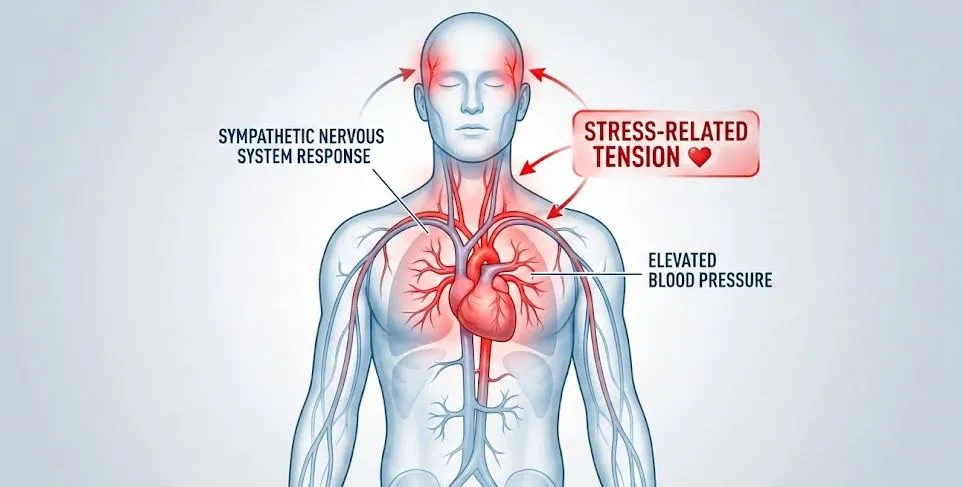
I can recall the precise moment my body began to shatter. I was 45, sitting at my desk, and the deadline on which I’d been working for weeks felt like a heavy physical mass resting across my chest. My neck was a bole of tension, my temples pounded and my heart beat so insistently, I could see it ripple through my T-shirt. I jerked the blood pressure monitor out of my drawer — the one I had taken to keeping “just to check.” The numbers flashed: 168/102. A wave of cold fear washed over me. This wasn’t just a bad day. This was my new normal. Every stressors, big or small, was now written in my pulse.
If you’re reading this, you know exactly how that feels. That nagging worry when the cuff tightens. The frustration of being told your numbers are high, but the only solution offered is a prescription slip. You’re told it’s “age-related” or “just how your body is.” I was told that, too. I am not a doctor. But I am a man who refused that fate. For 20 years, I became a student of my own body. I researched, I experimented, and I rebuilt. Here is what I found.
The key to fixing this for me was understanding that stress isn’t just a feeling—it’s a direct, physical command to your arteries. I discovered I couldn’t just “relax more.” I had to build a new daily protocol that intercepted my body’s stress response before it could write the check my heart had to cash.
How Stress Increases Blood Pressure: My Wake-Up Call

I spent years thinking that my heart racing while in a traffic jam was only anxiety. I didn’t know exactly the mechanism at play. After i discovered in my reporting that when your brain experiences a threat — whether it’s an approaching deadline or an angry email — it sets off a primal survival mechanism.
My protocol began with understanding this chain reaction:
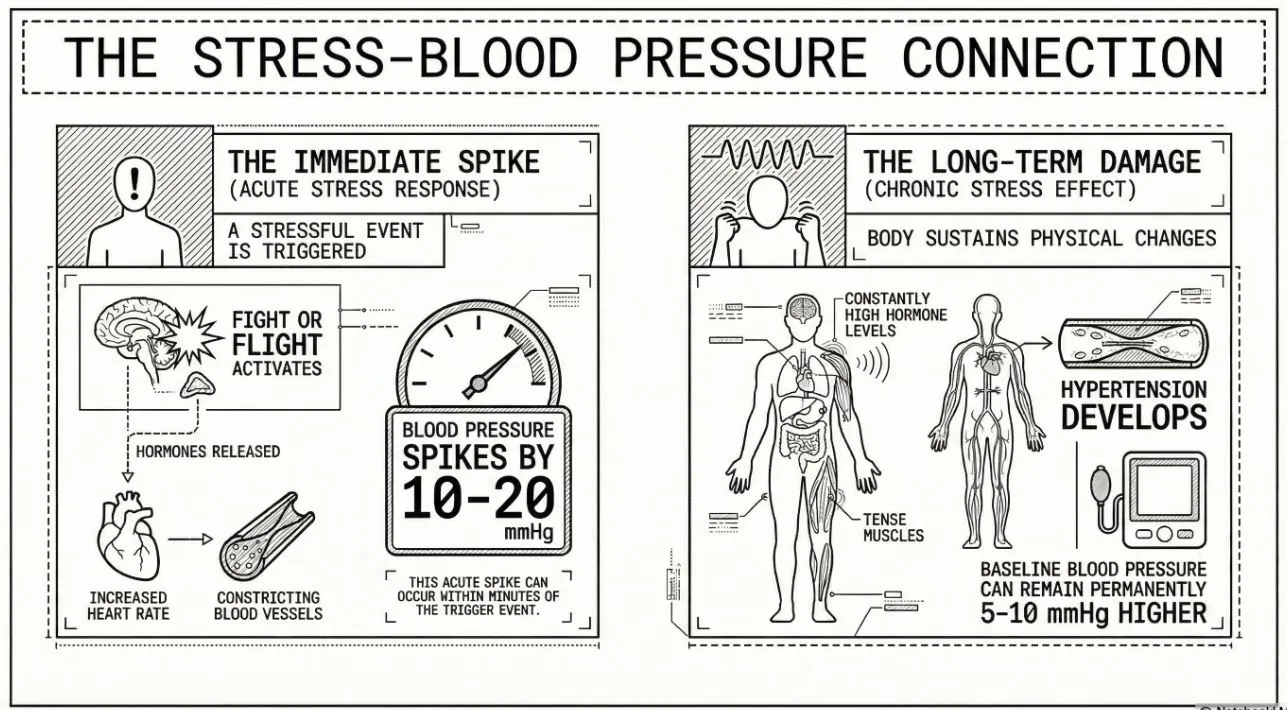
- The Alarm: Your brain signals your adrenal glands. They flood your bloodstream with hormones like cortisol and adrenaline.
- The Command: These hormones are like a siren for your entire system. Your heart rate speeds up to pump more blood.
- The Squeeze: Most importantly, your blood vessels constrict and harden. This is the main event. Think of stepping on a garden hose. And because the same amount of water (blood) has to squeeze through a smaller space (narrowed arteries), pressure soars.
This is called the “fight-or-flight” response. It’s brilliant for escaping a bear. It’s catastrophic when triggered by your inbox, day after day. My high reading at my desk wasn’t a mystery. It was my body, convinced it was in a fight for survival, preparing me for battle. The problem was, the battle never ended. My body was stuck in a state of permanent, low-grade emergency.n a single moment. The real danger, I learned, is when those temporary spikes become your new normal.
My Daily Protocol to Calm the Storm

Knowing the problem wasn’t enough. I had to build new habits that directly opposed this stress command. This wasn’t about a single miracle cure. It was about a stack of daily protocols that changed my body’s baseline.
Here is the exact routine I built:
The Sleep Foundation: I used to wear my 5 hours of sleep like a badge of honor. I learned it was a badge of stupidity. Poor sleep dramatically raises cortisol levels. I made 7-8 hours a pillar of my protocol. A cool, dark room and no screens before bed became my new law.
The Morning Anchor: I start every single day with 10 minutes of slow, deep diaphragmatic breathing. Not just a few sighs. I breathe in for a count of 4, hold for 4, and exhale for 6. This directly signals my nervous system that there is no emergency. It lowers my heart rate and tells my blood vessels to relax. This was my non-negotiable first step.
The Movement Mandate: I learned that chronic stress is like having your foot on the gas pedal 24/7. Exercise is a way to burn off those stress hormones. I didn’t start with marathons. I started with brisk 20-minute walks. Now, my protocol includes weight training. Building muscle has been foundational for my metabolic health.
The Dietary Shift: I cut out the inflammatory foods that made my system more reactive—mainly sugar and processed carbs. I focused on whole foods: vegetables, quality protein, healthy fats. I found that magnesium-rich foods like leafy greens and nuts helped my muscles (including the ones in my artery walls) stay relaxed.
Can Chronic Stress Cause High Blood Pressure? My Answer.
This was the big question for me. Can chronic stress cause high blood pressure that’s permanent? From my experience and research, the answer is clear: absolutely. Here’s why my 45-year-old body was breaking down.
Chronic stress means your repair systems never get to work. The inflammation from constant alertness damages artery walls. The constant vessel constriction can start to become semi-permanent. I wasn’t just having bad days; I was building a disease called hypertension, brick by brick, with every unchecked stressful thought.
My turnaround began when I stopped seeing stress as psychological and started seeing it as a physical environment for my cells. I changed their environment, and they healed.
Special Case: Stress, Blood Pressure, and Pregnancy

While my personal experience does not extend to pregnancy, my research into this topic was profound. The body’s stress machinery operates the same way. The hormones cortisol and adrenaline do not discriminate. For an expectant mother, chronic stress presents a unique concern because it’s not just her system being affected.
From the countless studies and accounts I’ve read, the consensus is clear: a state of constant tension can lead to sustained higher readings. This is why prenatal care so heavily emphasizes stress management, rest, and proper nutrition. The protocol for supporting healthy blood pressure during pregnancy is understandably more specific and must be done in close partnership with a qualified healthcare provider. The principle, however, remains: calming the nervous system is a universal benefit.ess increases blood pressure is similar, your personal context is everything. Listen to your own body first.
Also Read : Exercises for Anxiety and Stress.
Frequently Asked Questions
Yes, based on my experience and research, it can. Constant stress keeps your nervous system in “fight or flight,” leading to sustained higher hormone levels and vessel constriction. Over years, this can contribute to permanent hypertension. Calming the nervous system was my first priority.
In my tracking, an acute stressful event could spike my systolic (top number) by 10-20 mmHg in minutes. Chronic stress kept my baseline reading 5-10 mmHg higher than it is today. This shows the direct, measurable impact of mental state on physical health.
Absolutely. “White coat syndrome” is real. My readings were always highest in the clinic. I started taking my blood pressure at home in a calm, seated position to get a true baseline. I brought those logs to my doctor for a clearer picture.
Yes, it can within minutes. A stressful email, argument, or traffic jam triggers a hormone surge that makes your heart beat faster and vessels tighten. This is the acute spike. The danger is when these spikes happen all day, every day.
Mental tension leads to physical muscle tension, especially in the neck, shoulders, and chest. This constriction can impede blood flow and signal “danger” to the brain, which then tells the body to raise pressure. Breaking that muscle feedback loop with movement and stretching was key for me.
Conclusion
Understanding how stress affects blood pressure was the master key to my health after 50. It wasn’t about adding one more thing to my life. It was about subtracting the internal pressure I carried every day. I learned to be the architect of my own nervous system, building in moments of peace instead of constant emergency.
You have the same power. You are the architect of your own body. Start building today.
Disclaimer: The content on this website is based on personal experience and research. It is for informational purposes only and is not medical advice. I am not a doctor. Always consult your physician before changing your diet, exercise, or supplement routine.