

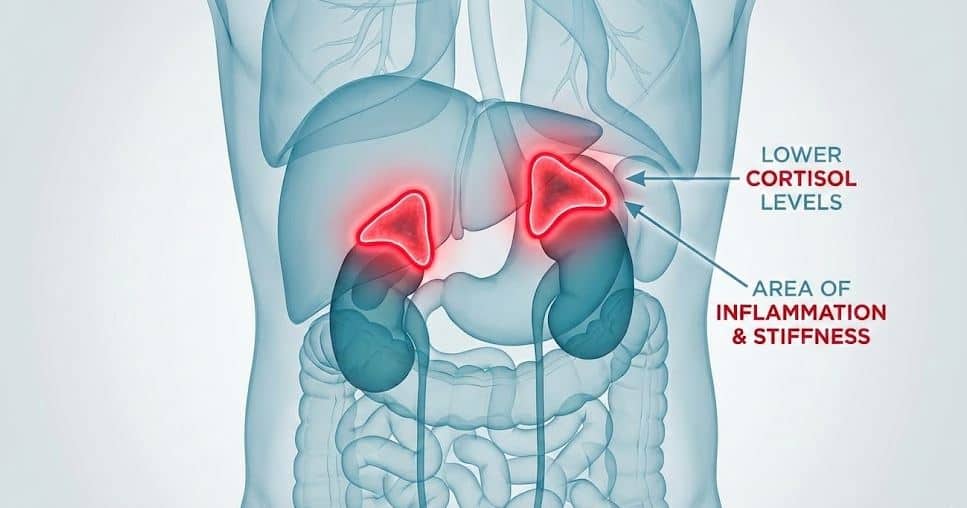
I recall the exact moment when I began my journey to reduce cortisol levels. I was 45. It was 4 AM when my eyes snapped open. My heart was pounding, not from a nightmare, but from nothing. A deep, buzzing anxiety was coursing through me.
My mind was racing with a to-do list I hadn’t even written yet. Back ached. My stomach was in knots. I was exhausted, but I knew sleep was finished for the night. This wasn’t a bad night. This was every night. I was drowning in a silent, invisible stress. I now know that the enemy had a name: cortisol.
If you’re reading this, you know that feeling. The wired-and-tired fog. The stubborn belly fat that laughs at dieting. The feeling that your body’s own stress response is torturing you. I was told it was “just aging” or “stress,” know exactly how that feels. I am not a doctor. But I am someone who spent 20 years figuring this out. Here is what I found.
The key to lowering cortisol for me wasn’t one magic pill. It was a system. I discovered that calming my body’s alarm system required gentle, consistent signals of safety. My protocol focused on simple, natural levers: specific nutrients, timed habits, and relearning how to rest. It fixed my sleep, melted the stress weight, and gave me my energy back.
How to Reduce Cortisol Levels(What Worked For Me)

After years of research and self-experimentation, I learned that chronic stress drains your body of key nutrients. You can’t just “think” your cortisol down. You have to give your body the biochemical tools to manage the stress response. These are the supplements I personally introduced to support my system.
- Ashwagandha: This was my foundation. Research suggests it helps the body adapt to stress. I found that taking 300mg of a high-quality KSM-66 extract in the morning made a noticeable difference. My background sense of urgency faded. This is what worked for me.
- Phosphatidylserine: This one was a game-changer for nighttime cortisol. I learned that high cortisol at night ruins sleep. Taking 100mg about 30 minutes before bed helped quiet my mind. It felt like it turned off the internal alarm clock that woke me at 4 AM.
- Magnesium Glycinate: Chronic stress burns through magnesium. I was likely deficient. Adding 200-400mg of magnesium glycinate at night supported muscle relaxation and deeper sleep. It wasn’t a sedative. It was filling a tank my body had run dry.
- A High-Quality Fish Oil: The inflammation from high cortisol is brutal. I added a potent fish oil (with high EPA/DHA) to my regimen. It helped soothe the systemic inflammation that made my joints ache and my brain foggy.
How to Lower Cortisol Levels Naturally in Women

While my core principles apply to everyone, I’ve walked this journey with my wife. I saw firsthand how a woman’s hormonal landscape interacts with cortisol. The “treatment for high cortisol levels in females” isn’t different medicine—it’s nuanced lifestyle design. Here’s what we learned together.
- Sync With Your Cycle: For women not in menopause, cortisol sensitivity can fluctuate. She found the luteal phase (the week or two before her period) was when stress felt overwhelming. That was the time to double down on gentleness—more yoga, earlier bedtimes, and saying no to extra commitments.
- Prioritize Protein at Breakfast: Skipping breakfast or having just carbs can spike cortisol. Her non-negotiable became a 30-gram protein breakfast within an hour of waking. Scrambled eggs, Greek yogurt, or a protein shake. This stabilized her blood sugar and gave her stress hormones a clear signal that the day was starting fed and safe.
- Reframe “Rest” as Productive: Society tells women to “do it all.” We had to redefine strength. Rest became the most productive hour of her day. A 20-minute afternoon lay-down with an eye mask, not to sleep, but to breathe and rest, lowered her afternoon cortisol surge more than any supplement alone.
Breaking the Cycle: How to Reduce Cortisol Belly Fat

That stubborn fat around the midsection? I called it my “stress suit.” It’s visceral fat, and cortisol directly tells your body to store it there. You can’t starve it away. You have to calm it away. The path for how to lower cortisol levels and lose weight is the same path.
- Stop Catastrophic Cardio: I used to pound the pavement, thinking more was better. I was wrong. Long, intense cardio sessions can raise cortisol. I switched to walking and strength training. Three 45-minute walks in nature per week and two heavy (for me) lifting sessions built muscle, which improves metabolic health, without spiking my stress hormones.
- Master Your Morning Light: The first hour sets your cortisol rhythm. I got bright, natural light in my eyes within 30 minutes of sunrise (even on cloudy days). This signals your brain that the “stress hormone” (cortisol) peak should happen early in the day, not at night. No phone light. Real sunlight.
- The 4 PM Protein Bridge: That afternoon energy crash often leads to cortisol-raising sugary snacks. Every day at about 4 PM, I have a small protein snack. A handful of almonds, a piece of cheese, a hard-boiled egg. This tiny habit prevents the blood sugar dip that triggers a cortisol spike and subsequent belly-fat storage.
The Daily Rhythm: My Non-Negotiable Habits

The best supplements to reduce cortisol mean little without the right daily habits. These are the pillars that hold the entire system up.
- The Caffeine Cutoff: I loved coffee. But caffeine after noon was sabotaging my sleep. My rule is now absolutely no caffeine after 12 PM. My sleep depth improved dramatically.
- The Sugar Shield: Refined sugar and high cortisol are a vicious cycle. I don’t ban it, but I am militant about never eating sugary foods on an empty stomach. Always pair it with protein, fat, and fiber.
Also Read : Stress Relief Activities for Adults at Home.
- The Breathing Reset: When I feel that buzz of stress, I don’t try to think my way out. I breathe my way out. Box breathing: inhale 4 seconds, hold 4, exhale 4, hold 4. I do this for 2 minutes. It’s a direct signal to your nervous system that the emergency is over.
Frequently Asked Questions
The single fastest tool is controlled, deep breathing. It directly activates your parasympathetic (calm) nervous system. Sit still, place a hand on your belly, and make your exhales longer than your inhales for just 90 seconds. This is my emergency brake.
Focus on foods that stabilize blood sugar and reduce inflammation. In my experience, daily intake of dark leafy greens, fatty fish like salmon, berries, nuts (especially walnuts and almonds), and dark chocolate (85%+) made a tangible difference in my baseline calm.
You must address the cortisol first. Combine daily moderate walking (to lower stress, not exhaust you), strength training twice a week to build metabolism-supporting muscle, and a protein-focused diet. The belly fat leaves as a side effect of calming the system down.
This isn’t a term I used, but I understand the concept. My approach was a 21-day practice of my core habits: consistent sleep/wake times, daily morning light, a daily 20-minute walk, no sugar on an empty stomach, and a daily breathing session. It’s a reset period to teach your body a new rhythm.
Yes, because the goal is the same: support a healthy stress response. The supplements I mentioned (like Ashwagandha and Fish Oil) help modulate cortisol and the inflammation that drives visceral fat storage. They work on the root cause, not just the symptom.
Conclusion
Learning how to lower cortisol levels naturally was the master key that unlocked everything else for me. It wasn’t about fighting my body. It was about learning its language and giving it what it needed to stand down from a 20-year-long red alert, finally. The deep sleep, the stable energy, the loss of that stubborn weight—they were all side effects of a quieter, calmer internal state.
This is your body. You are not a passenger in its decline. You are the architect of your own body. The tools are here: gentle movement, targeted nutrients, light, protein, and breath. Start building today.
Disclaimer: The content on this website is based on personal experience and research. It is for informational purposes only and is not medical advice. I am not a doctor. Always consult your physician before changing your diet, exercise, or supplement routine.