

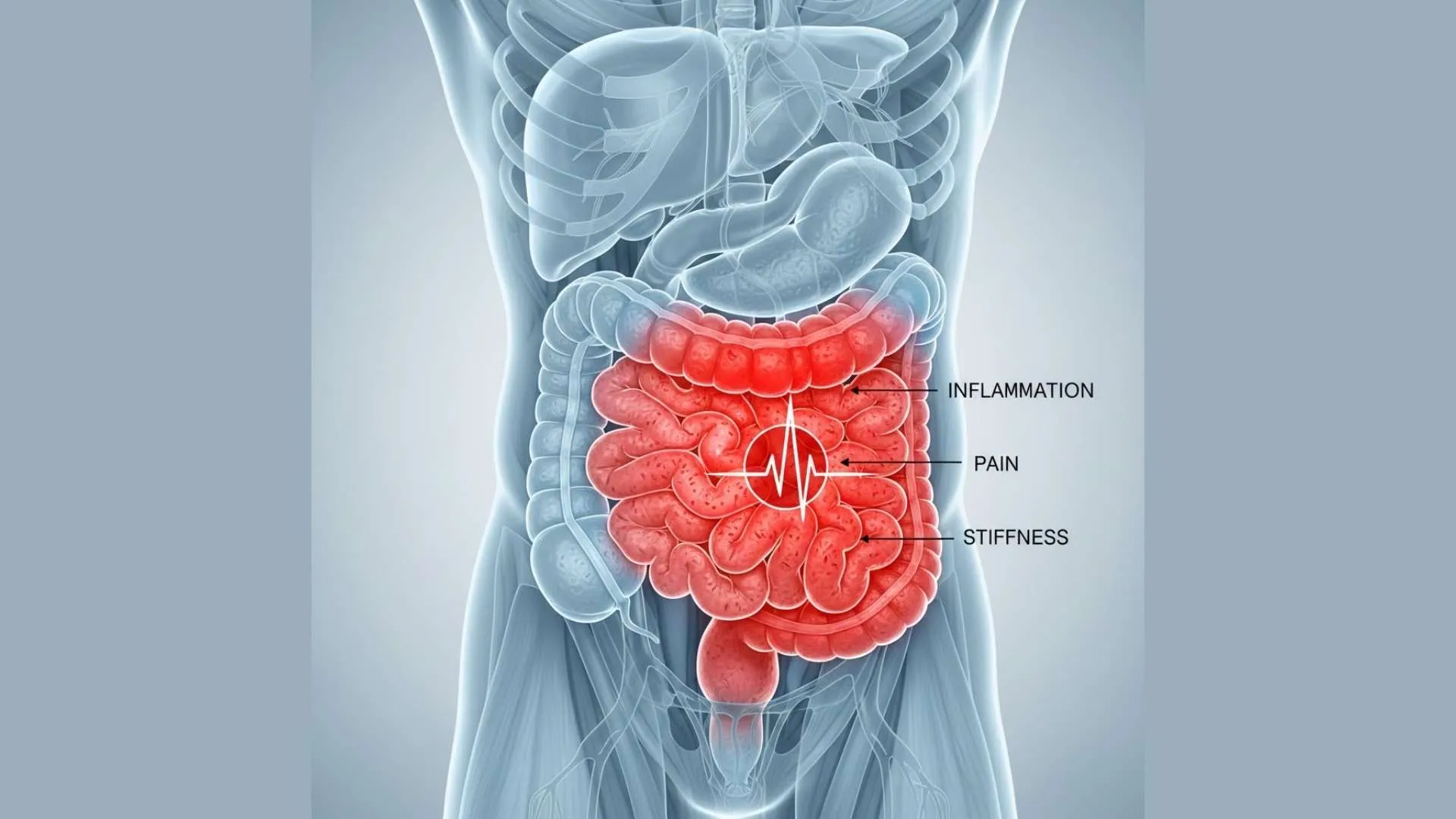
At 45, my mornings were a battle. I woke up bloated, with stomach cramps that felt like rocks grinding together. I was exhausted by 10 AM. My doctor ran tests and said, “It’s just getting older. Your digestion is slowing down.” For years, I accepted the daily pain, the urgent trips to the bathroom, and the constant fatigue as my “new normal.” I didn’t realize I was showing classic signs of lactose intolerance, and I was paying a heavy price for ignoring it. Here’s What Happens If You Ignore Lactose Intolerance.
If you’re reading this, you might know that feeling. The dread after a bowl of ice cream. The planning of your day around bathroom access. The frustration of being told it’s “just aging.” I know exactly how that feels. I am not a doctor. But I am a man who spent 20 years figuring out how to rebuild his body. I want to share what I discovered about what happens if you ignore lactose intolerance and, more importantly, how I found a path forward.
The key for me was not powering through the pain. Ignoring the problem made everything else I was trying to do for my health impossible. My solution was a simple, two-part protocol: first, I learned to identify and eliminate the hidden triggers, and second, I focused intensely on healing my gut so it could handle life’s surprises.
The Hidden Cost of Ignoring Lactose Intolerance Long-Term

For two decades, I treated my body like a machine I could override. I ignored the signals. Consequently, my minor digestive discomfort snowballed into systemic problems. Here’s what my research and painful experience taught me about the long-term game.
- Chronic Inflammation Becomes Your Normal: The constant digestive irritation from undigested lactose doesn’t stay in your gut. It sparks low-grade inflammation throughout your body. For me, this meant my old joint injuries ached more, and my recovery from exercise slowed to a crawl.
- You Damage Your Gut Lining: Think of your intestinal wall as a fine sieve. Constant irritation can make that sieve more porous—a condition often called “leaky gut.” When this happens, particles that should stay in your digestive tract can enter your bloodstream, confusing your immune system.
- You Rob Your Body of Nutrients: When your digestive system is in constant distress, it can’t do its main job: absorbing nutrients. I was eating good food, but my body wasn’t getting the full benefit. This led to unexplained fatigue and weakness that no amount of sleep could fix.
- It Sabotages Your Quality of Life: The mental load is real. The anxiety about meals, the social embarrassment, the constant planning—it drains your energy and joy. Fixing this was the first step to fixing my overall vitality.
Symptoms of Lactose Intolerance: It’s Not Just Bloating

We often think of the stomach issues. However, the symptoms can be broader, especially in women due to hormonal interactions that can amplify sensitivity. In my research, I found many people, particularly females, reporting these overlooked signs.
- The Obvious Digestive Signals: Bloating, gas, diarrhea, and stomach cramps shortly after dairy. This was my primary experience.
- The Less-Obvious Systemic Signals: These were the game-changers for my understanding.
- Fatigue and Brain Fog: The inflammatory response can leave you feeling drained and mentally cloudy.
- Skin Issues: For some, inflammation manifests as eczema or acne. Can lactose cause itching? In my deep dive into research, I found many anecdotal reports linking dairy sensitivity to itchy skin and rashes.
- Joint and Muscle Aches: The systemic inflammation I mentioned often settled in my weakest joints.
My Protocol to Stop Lactose Intolerance Pain Immediately
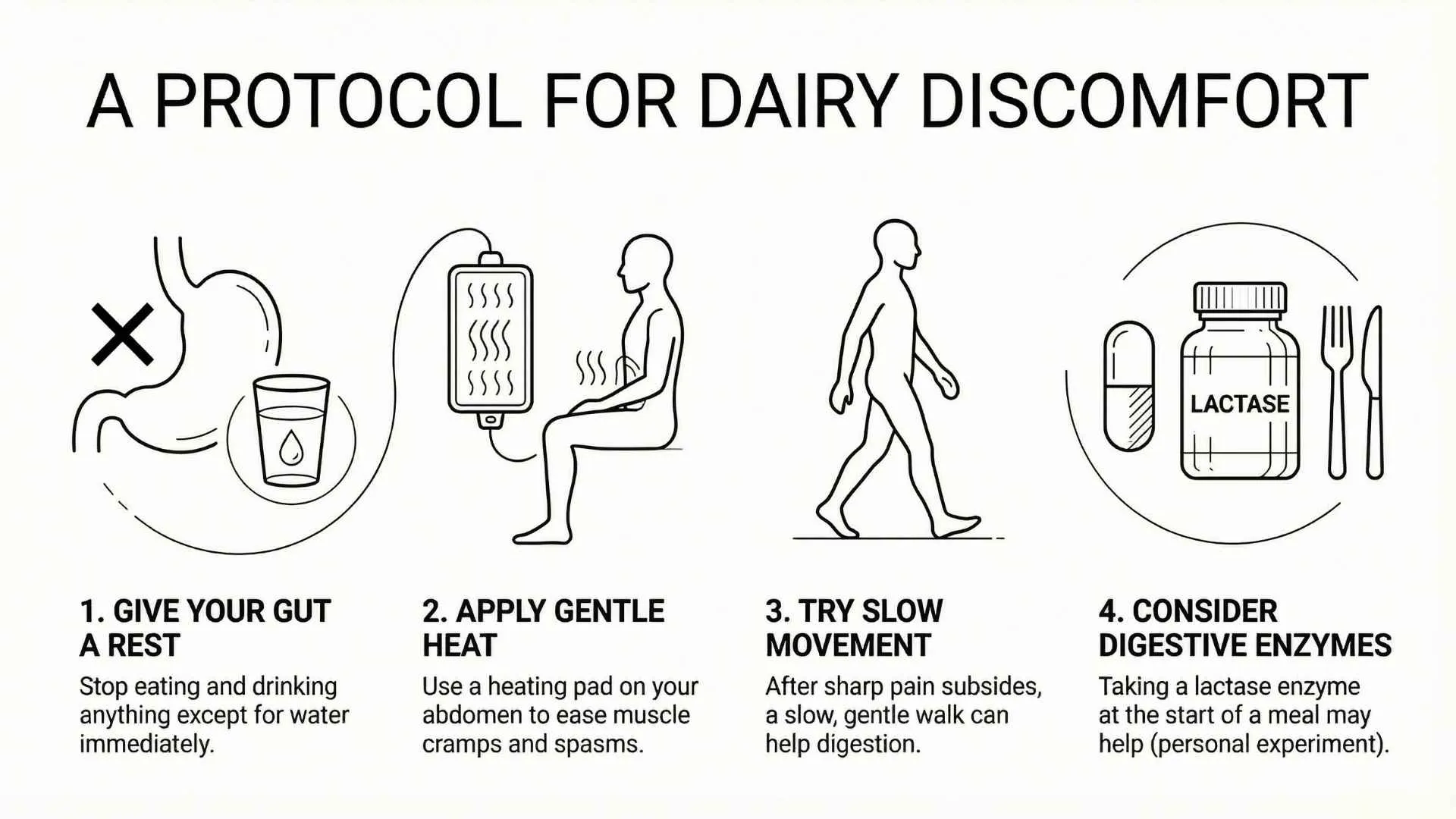
I needed a strategy for accidents, or for times I chose to indulge. Over the years, I developed a personal emergency toolkit. This is what worked for me.
- The Immediate First Step: Stop eating and drinking anything except water. Give your gut a complete rest.
- Heat is Your Friend: I always used a heating pad on my abdomen. The warmth helped ease the muscle cramps and spasms almost instantly.
- Gentle Movement: Once the sharp pain passed, a very slow, gentle walk seemed to help my digestion start moving again. No exertion, just motion.
- The Supplement I Tried: I experimented with high-quality digestive enzymes containing lactase. Taking them right at the start of a meal with dairy sometimes helped. This was a personal experiment, not a cure. This is what worked for me.
Can You Cure Lactose Intolerance by Drinking Milk? The Hard Truth
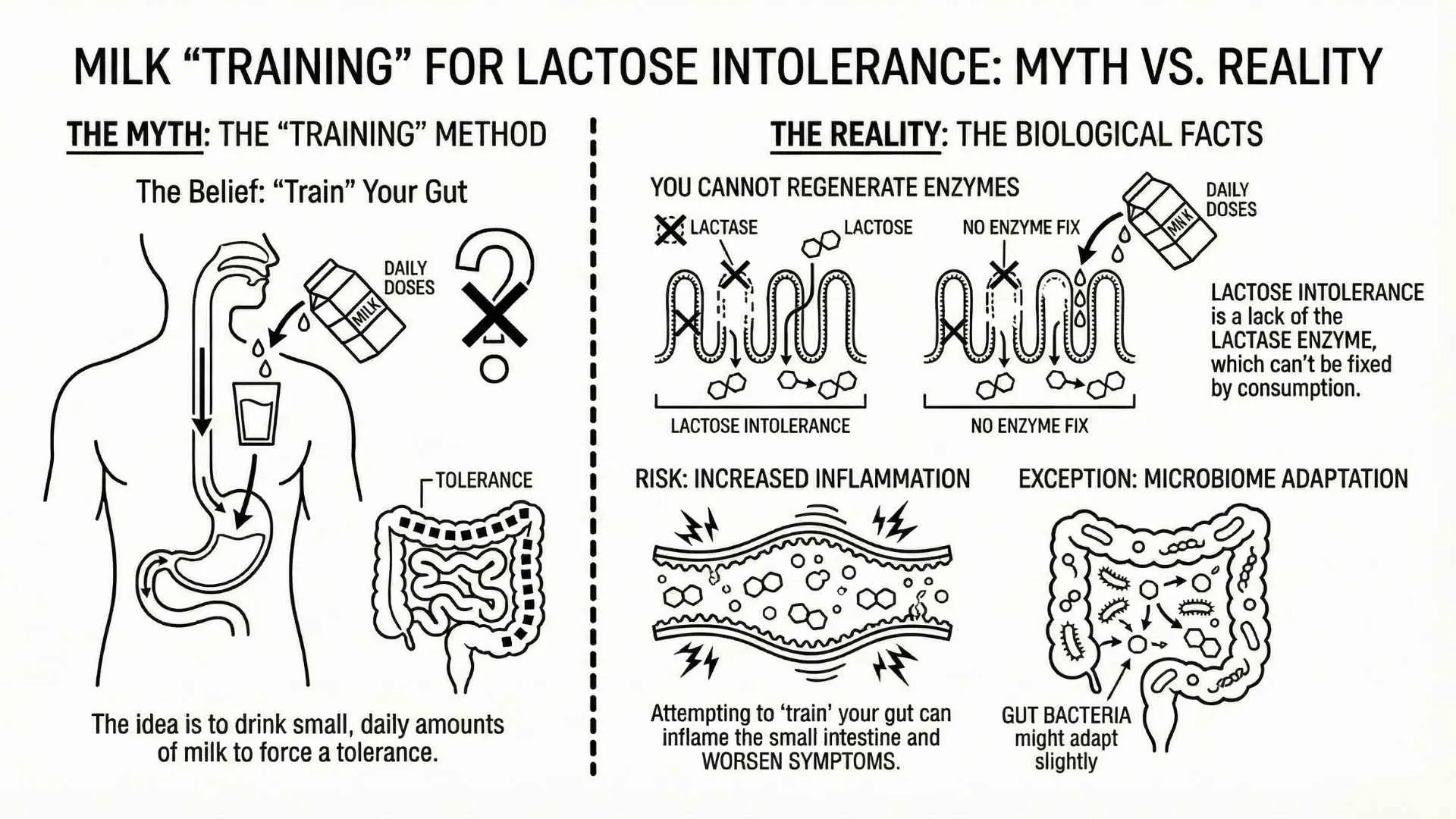
I tried this. In my 40s, desperate for a simple fix, I thought I could “train” my gut. I drank small amounts of milk daily, hoping to build tolerance. The result? I made everything worse. Here’s what I learned.
- You Cannot “Cure” a Lack of Enzymes: Primary lactose intolerance happens because your small intestine stops making enough lactase enzyme. You can’t force it to make more by flooding it with lactose. You only inflame it further.
Also Read : Best Pro-biotic foodsfor Gut Health.
- You Might Build Microbiome Tolerance: Interestingly, some research suggests that regularly introducing tiny, controlled amounts might help certain gut bacteria adapt to better handle it. However, this is a slow, delicate process and backfired for me. It’s not a “cure,” but a potential management strategy that requires extreme care.
The Ultimate Question: Should I Stop Drinking Milk?
This was my biggest mental hurdle. Milk was a staple. My answer, after 20 years, is not a simple yes or no. It’s a strategic choice.
- The Elimination Test is Essential: I removed all lactose (milk, cheese, yogurt, hidden sources in processed food) for 30 days. It was challenging. But by day 10, my bloating was gone, my energy surged, and my chronic pain faded dramatically. This was proof.
- Reintroduction is Your Map: After 30 days, I reintroduced foods one by one. I discovered hard, aged cheeses (like Parmesan) often had minimal effect because they are very low in lactose. This became my new blueprint.
- You Become the Architect: Now, I choose. I know that a glass of milk will have a consequence. So, I ask: “Is this worth it?” Most of the time, the answer is no. I use delicious alternatives like almond or oat milk. But on a rare, special occasion, I make an informed choice and use my immediate protocol.
Frequently Asked Questions
In my reading, I found it described in phases: 1) Lactase Persistence (normal digestion), 2) Lactase Non-Persistence (declining enzyme), 3) Symptomatic Intolerance (noticeable symptoms), and 4) Management (dietary adaptation, which is where I live now).
While not a classic symptom, research suggests the systemic inflammation from dairy sensitivity can manifest as skin issues like eczema or hives, which involve itching. I met many people who reported this link.
Typically, no. True lactose intolerance shouldn’t cause a fever. If you have a fever with severe digestive upset, it could point to a different issue, like an infection. That was a sign for me to always consult my physician.
The condition itself is not fatal. However, ignoring lactose intolerance long-term can lead to severe dehydration from chronic diarrhea or significant nutrient deficiencies, which can cause serious health complications. Don’t ignore severe symptoms.
This is your core decision. Based on my experience, a strict elimination period is the only way to know for sure. If your symptoms resolve, you have your answer. Then, you can decide if and how to reintroduce it strategically.
CONCLUSION
Ultimately, learning what happens if you ignore lactose intolerance was my wake-up call. It wasn’t just about stomach aches; it was about chronic inflammation, stolen energy, and a compromised life. Ignoring it held back my entire health transformation. By listening to my body, mapping my triggers, and making strategic choices, I turned a weakness into a manageable part of my protocol. You don’t have to live in pain or confusion.
You are the architect of your own body. Start building today.
Disclaimer: The content on this website is based on personal experience and research. It is for informational purposes only and is not medical advice. I am not a doctor. Always consult your physician before changing your diet, exercise, or supplement routine.